
Summer Programs
Unicollege offers summer study abroad programs structured as intensive, condensed academic sessions for students from U.S., Canadian, and European partner universities, as well as independent participants seeking a credit-bearing experience within the Italian Higher Education System. While delivered over a shorter timeframe of 2 to 8 weeks, these programs award the same academic credit as traditional semester courses—6 Italian/European credits or 3 U.S. credits—through a rigorous and accelerated format. Summer sessions run from May through September and are designed as a strategic option for students wishing to complete in a few weeks the equivalent academic workload typically achieved over a 3 to 5 month semester.
Academic Structure
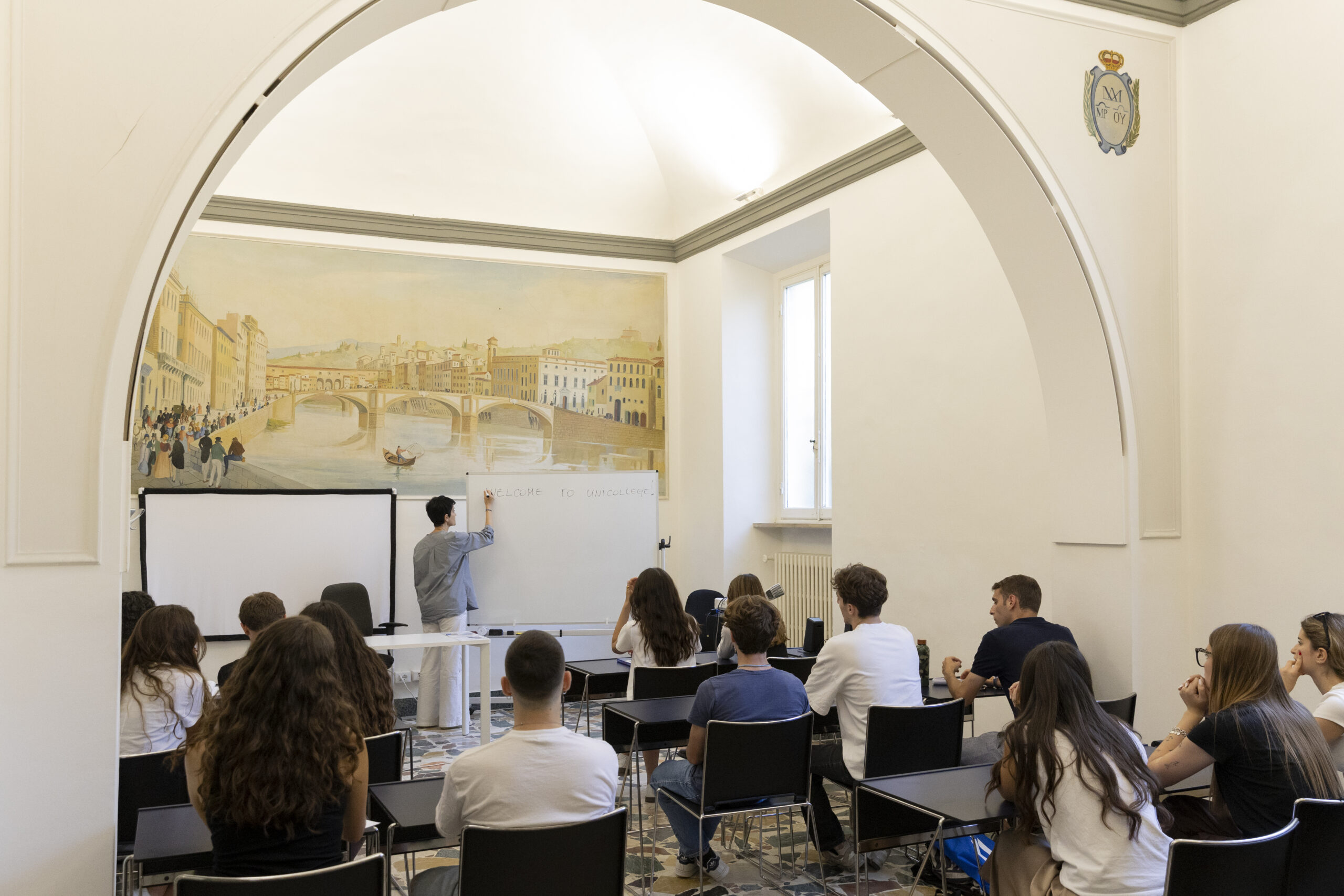
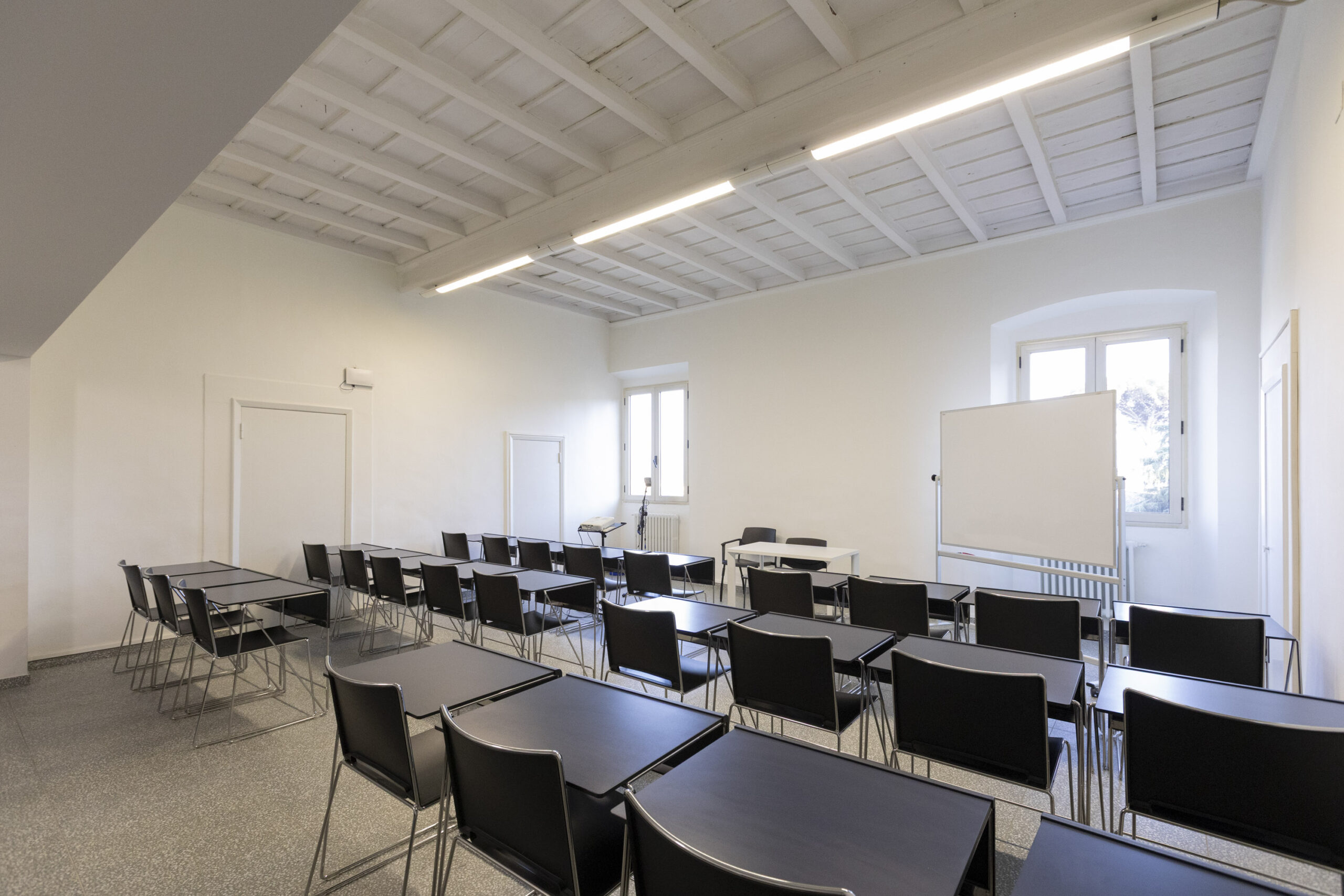
Courses are taught in English within Unicollege’s accredited academic framework and follow established university standards, including 45 contact hours, defined learning outcomes, and formal assessment methods. Unlike traditional semester courses that meet once or twice per week, summer classes are delivered in a more concentrated format, typically convening 3 to 5 times weekly depending on the course and session. This accelerated structure enables students to earn full academic credit in a shorter timeframe. In line with the Italian university system, students may enroll across disciplines without formal prerequisites and may complement their coursework with experiential components such as field trips or credit-bearing internships. Small class sizes, typically ranging from a 1:11 to 1:13 ratio depending on campus, support an engaging and personalized academic experience.
Enrollment, Duration, and Credits
Summer programs operate on a rolling admissions basis, with applications accepted year-round and enrollment available up to 30 days prior to the start of each session. Students are placed in the next available term, allowing for flexible scheduling (for example, an applicant applying in June may enroll in a July or August session). The condensed nature of the program allows students to earn 3 U.S. credits (6 ECTS) within a 2 to 8 week period, making it possible to achieve in a short timeframe the same academic progress typically completed over an entire semester. For U.S. students, the duration of the program—being under 90 days—also allows participation without the need for a student visa, further simplifying access.
Course Structure and Assessment
Courses are delivered in a format consistent with university-level instruction and include the following academic expectations:
- Attendance requirement: Minimum 75% of total course duration
- Class schedule: Typically meets once per week, Monday through Friday
- Prerequisites: None for courses designed for international and visiting students
- Course access: Not organized by level bands (e.g., 100/200/300/400); open across disciplines
Grading follows the Italian system on a 30-point scale (with 18/30 as the minimum passing grade), accompanied by systematic conversion to U.S.-equivalent grades.
Assessment breakdown:
- Attendance and participation: 5%
- Capstone project: 15%
- Final examination: 80%
International Learning Environment
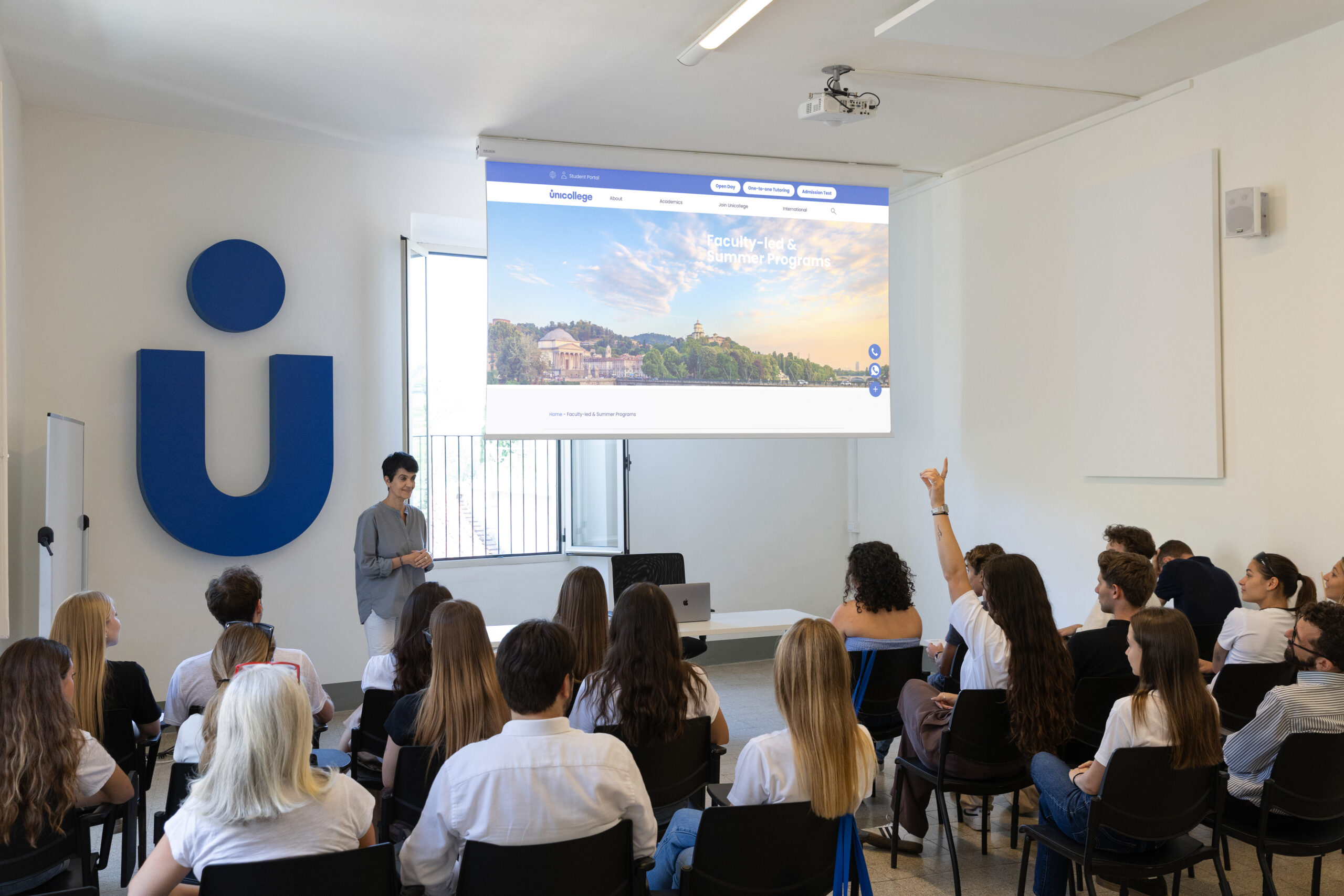
Students enrolled in summer programs study alongside Italian, European, and international peers from over 80 countries within an English-speaking academic environment. Instruction, faculty interaction, and administrative support are all provided in English, ensuring accessibility while maintaining a globally diverse classroom. This unique setting allows participants to combine accelerated academic progress with meaningful intercultural engagement, creating a comprehensive and internationally integrated study abroad experience.
Campuses and Locations
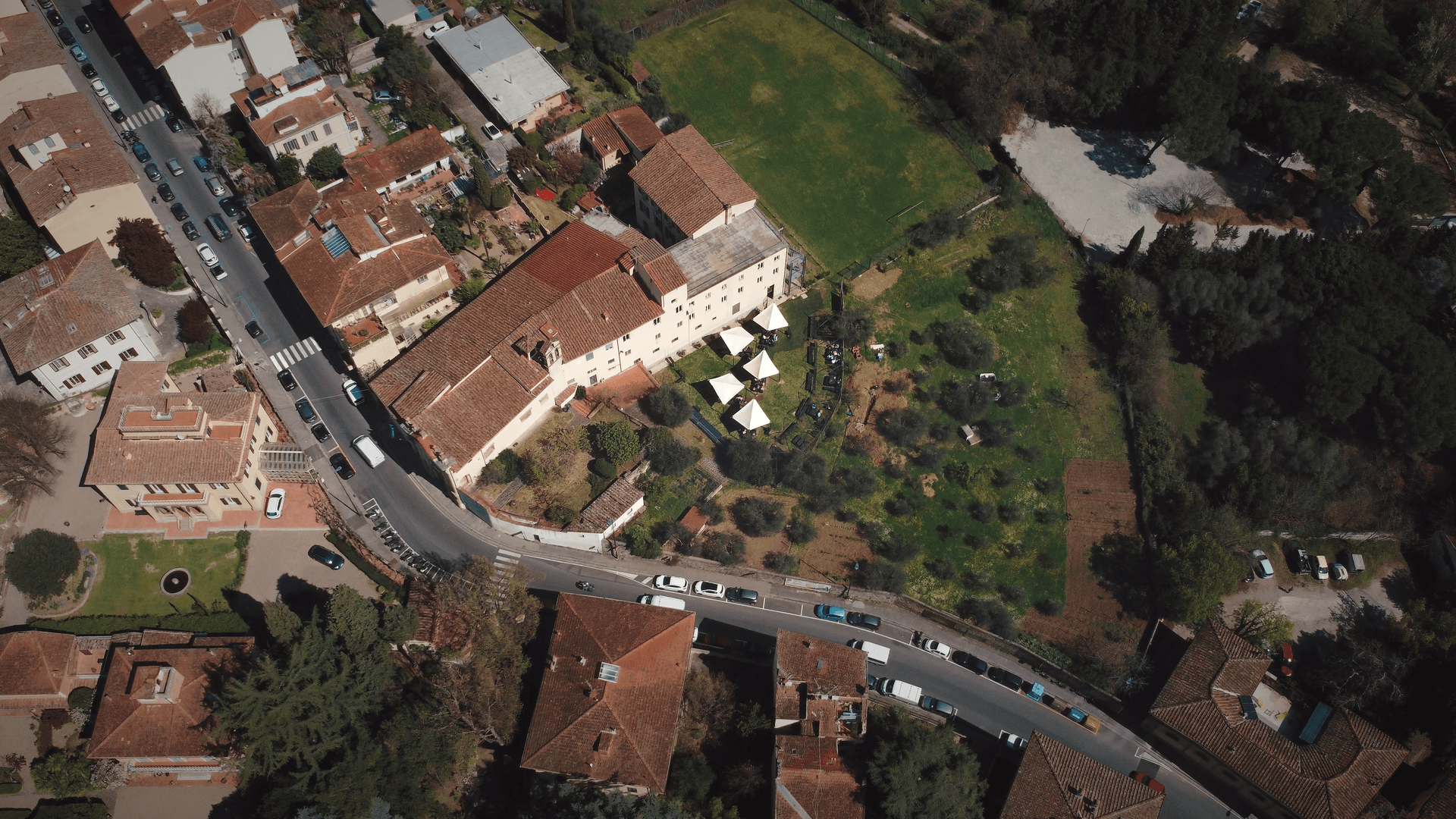
Students may choose to study at Unicollege campuses in Florence, Mantua, Milan, or Turin. Each location offers a distinct academic and cultural environment while operating under a unified institutional framework, academic regulations, and quality standards.
Housing, Meals, and Student Life
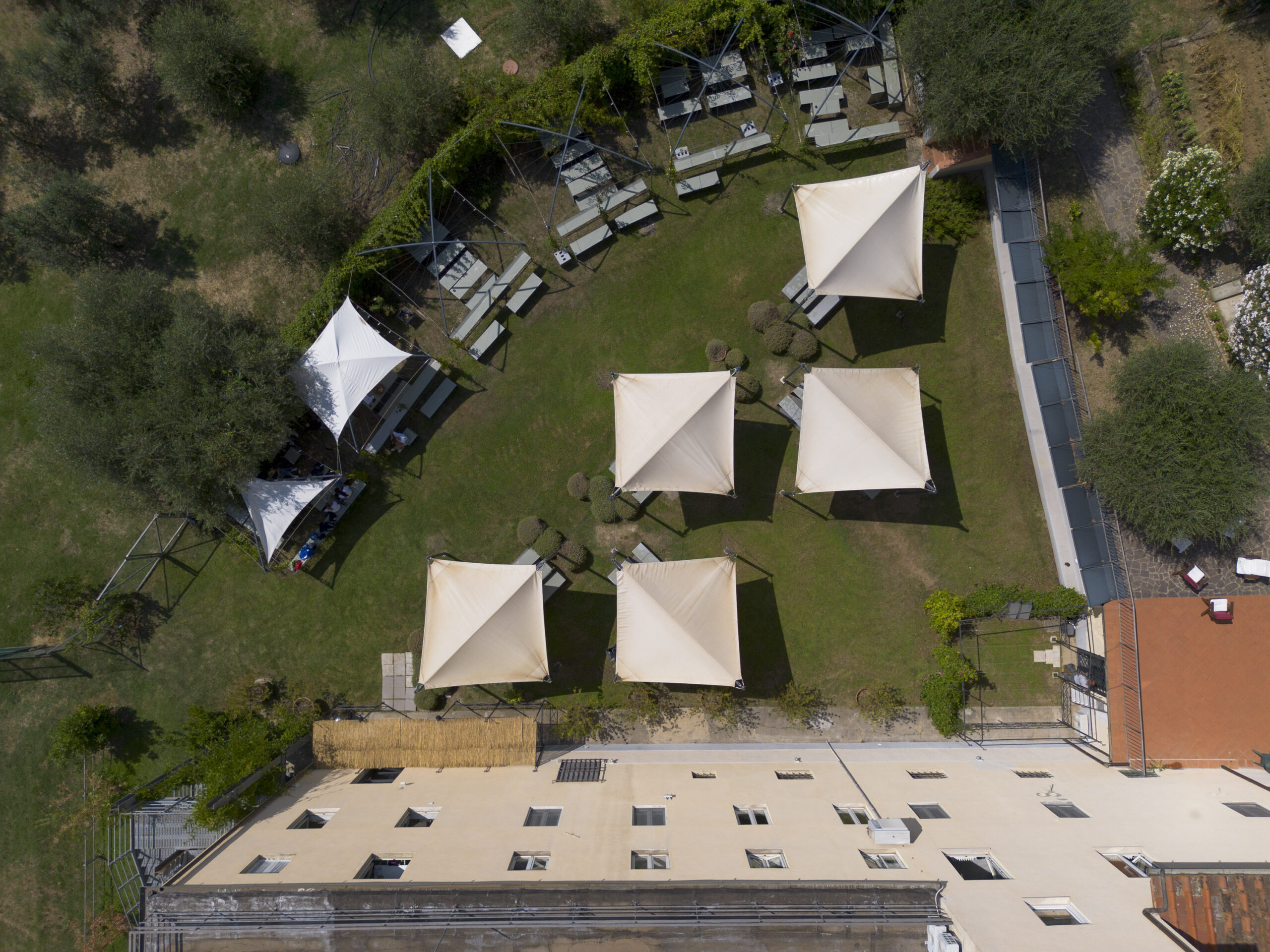
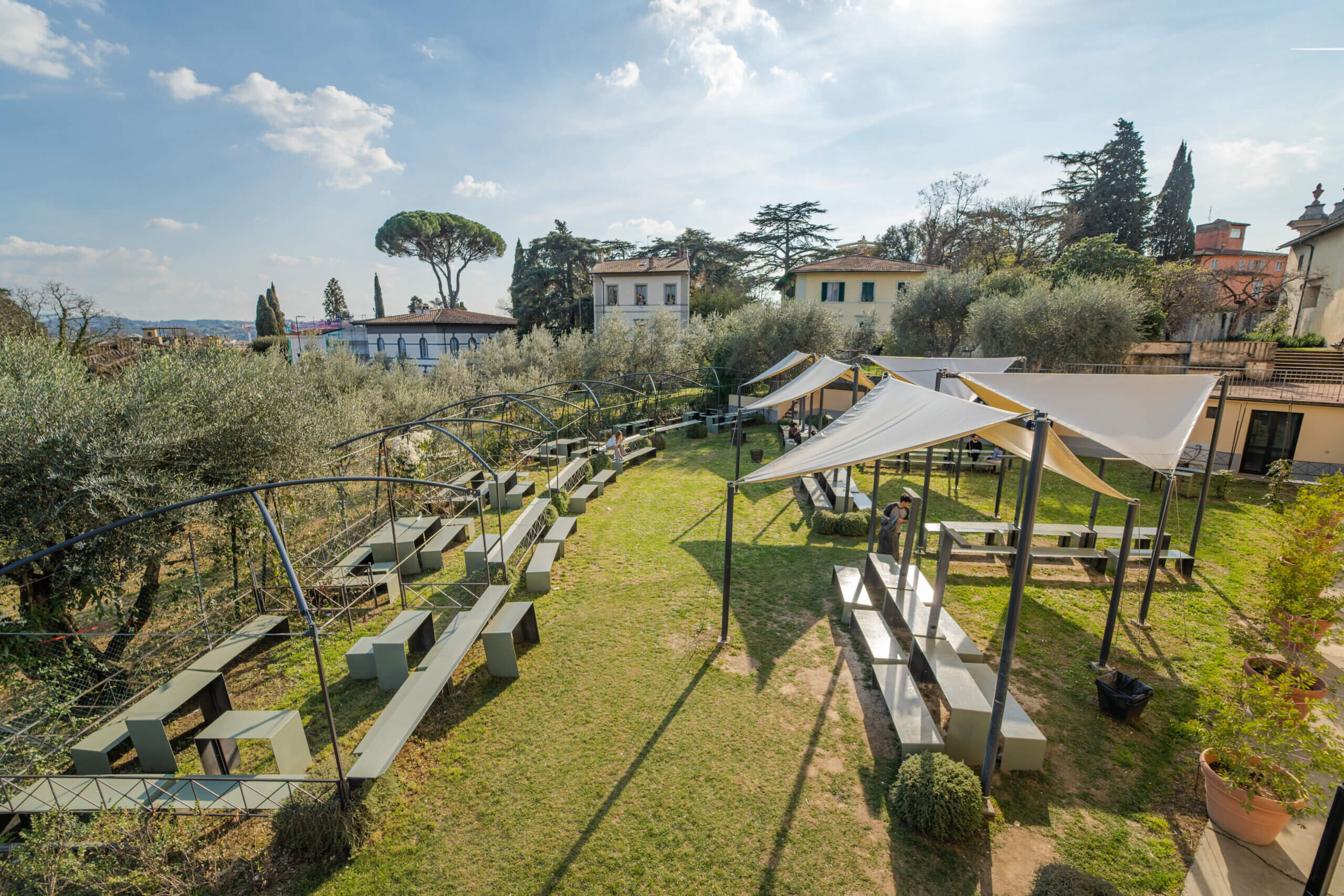
The summer experience is designed to be fully immersive, with students residing on campus and benefiting from integrated accommodation and meal plans. This structure supports a holistic study abroad experience, combining academic engagement with daily campus life and services. In addition to coursework, students participate in a dynamic student environment, fostering cultural exchange and community through shared living and learning spaces. The compact format also contributes to cost efficiencies in both tuition and living expenses compared to longer-term programs.
Housing Policy and Placement
Students are primarily housed in on-campus residences. When on-campus capacity is reached, accommodation is arranged within Unicollege’s established housing network, which includes affiliated apartments and residential facilities located in close proximity to the campus. All housing options meet institutional standards of safety, accessibility, and academic integration. Assignments are made on a first-come, first-served basis. While every effort is made to prioritize on-campus placement, Unicollege reserves the right to allocate students to alternative approved accommodations within its network, including vetted housing providers or verified host families, in order to ensure continuity of services and compliance with institutional requirements. Housing placements are confirmed prior to arrival whenever possible. Final details, including address and check-in instructions, are communicated to students before the start of the academic term.
Accommodation Features
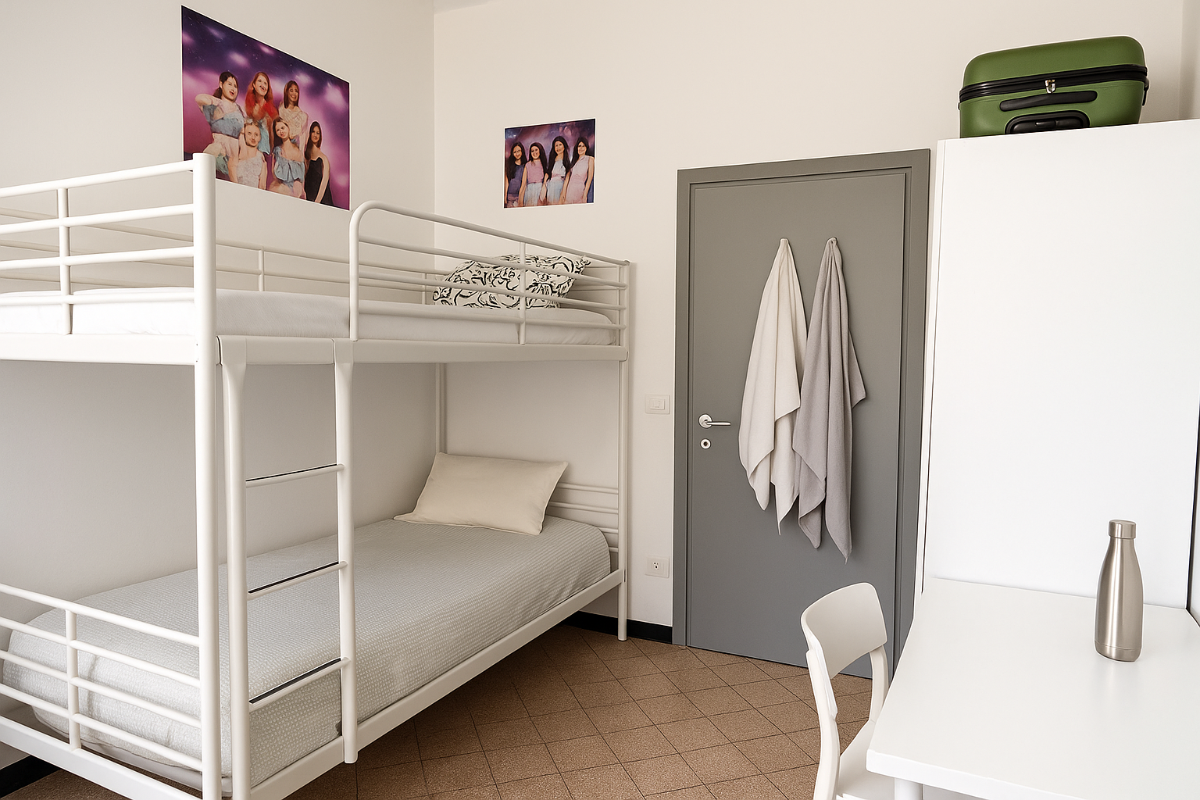
Accommodation types may vary by location and availability and span a range of configurations, including single rooms, single rooms with ensuite facilities, double rooms with separate beds or bunk beds, triple and quadruple rooms, as well as apartment-style accommodations designed for one or two occupants. Standard amenities across all housing options include fully equipped kitchens, full bathrooms with sinks and showers, separate toilet facilities, laundry areas with washing machines and dryers, shared living rooms, Wi-Fi access, and air conditioning where applicable. All housing is furnished and suitable for medium- to long-term academic stays.
Meals and Services
A meal plan is included in all Unicollege study abroad programs. Meals are normally provided on campus at the Unicollege cafeteria; in exceptional or seasonal circumstances, approved alternative solutions may be implemented. The standard meal plan includes one daily meal, typically consisting of a main course, a drink, and coffee. Details regarding meal services are shared with students prior to arrival. Additional arrangements may be requested by contacting the Unicollege Study Abroad Office.








Course Catalog
Introduction to Criminal and Penitentiary Law
6 (Italian/European credits) 3 US credits
This course offers a comprehensive introduction to the principles of criminal law and the organization of penitentiary systems. Students will examine the legal foundations that define criminal responsibility, the structure of criminal offenses, and the procedural pathways that guide judicial decision-making. A central focus is placed on the evolution of penitentiary institutions, the philosophy of punishment, and contemporary debates around rehabilitation, inmate rights, and alternative sanctions. Through case analyses and applied discussions, students will develop a solid understanding of how legal frameworks shape criminal justice policies and influence the management and reintegration of offenders.
Sociology of Deviance and Criminogenesis
6 (Italian/European credits) 3 US credits
This course investigates the sociological foundations of deviant behavior and the processes that contribute to the emergence of criminality. Students will explore classical and contemporary theories of deviance, examining how social structures, cultural norms, inequality, and group dynamics influence both individual and collective forms of rule-breaking. Key topics include labeling theory, social control, subcultures, and the intersection of crime with socialization processes. By integrating empirical research and case-based discussions, the course equips students with analytical tools to critically interpret deviance as a social construct and to understand the complex factors that drive criminogenesis in modern societies.
Clinical and Forensic Psychology
6 (Italian/European credits) 3 US credits
This course provides an in-depth overview of psychological principles as applied to clinical assessment and forensic contexts. Students will study diagnostic methods, personality assessment, risk evaluation, and intervention strategies used in clinical practice, alongside specialized forensic applications such as competency evaluations, offender profiling, and courtroom testimony. Emphasis is placed on understanding the psychological mechanisms underlying criminal behavior, the role of mental disorders in legal settings, and the ethical challenges faced by practitioners. Through practical examples and case simulations, students will develop foundational competencies for analyzing behavioral evidence and contributing to multidisciplinary justice processes.
Crime Scene Analysis: Inspection, Evidence Collection, and Profiling
6 (Italian/European credits) 3 US credits
This course offers a practical and methodological exploration of crime scene investigation and forensic analysis. Students will learn systematic approaches to inspecting crime scenes, documenting physical environments, and collecting and preserving evidence in accordance with legal and scientific standards. Topics include trace evidence, biological and digital evidence, chain of custody procedures, and the integration of forensic technologies. The course also introduces behavioral profiling, examining how patterns of evidence can support investigative hypotheses. Through simulations, hands-on activities, and real-world case studies, students gain the skills needed to interpret forensic data and support investigative decision-making with accuracy and rigor.
Introduction to Psychopathology
6 (Italian/European credits) 3 US credits
This course examines the foundations of psychopathology through the study of major psychological disorders, diagnostic criteria, and theoretical models. Students will explore the biological, psychological, and social dimensions of mental illness, analyzing conditions such as mood disorders, psychotic disorders, personality disorders, and trauma-related syndromes. Emphasis is placed on understanding symptomatology, etiology, and treatment approaches, as well as the implications
of mental disorders for daily functioning and social behavior. Through case analyses and applied reflections, the course equips students with a nuanced understanding of mental health challenges and their relevance in clinical, educational, and forensic settings.
Criminology and Victimology
6 (Italian/European credits) 3 US credits
This course provides an integrated exploration of the causes, patterns, and social dynamics of criminal behavior alongside the study of victimization. Students will examine major criminological theories, the socio-economic factors influencing crime, and the role of institutions in prevention and control. A parallel focus is dedicated to victimology, encompassing victim profiles, the psychological impact of crime, and support systems within the justice process. Through case studies and applied research, students will gain the analytical tools needed to understand the interplay between offenders, victims, and the broader community, while developing competencies relevant to policy evaluation and restorative justice practices.
Forensic Neuroscience
6 (Italian/European credits) 3 US credits
This course explores the intersection of neuroscience and the legal system, focusing on how brain functioning influences behavior, decision-making, and criminal responsibility. Students will study neural development, cognitive processes, and the biological correlates of aggression, impulse control, and antisocial behavior. Key themes include neuroimaging technologies, neurolaw, and the ethical implications of employing neuroscientific evidence in forensic contexts. Through interdisciplinary discussions and examination of landmark cases, students will develop a nuanced understanding of how emerging neuroscientific knowledge informs criminal investigations and judicial reasoning.
Artificial Intelligence and Cybercrime*
6 (Italian/European credits) 3 US credits
This course investigates the evolving relationship between artificial intelligence, digital technologies, and cyber-enabled crime. Students will analyze contemporary forms of cybercrime—including identity theft, digital fraud, hacking, and AI-driven exploitation—while exploring the technological infrastructures that enable them. The curriculum emphasizes risk assessment, cybersecurity strategies, digital forensics, and the regulatory challenges posed by autonomous systems and algorithmic threats. Through applied projects and scenario-based exercises, students will acquire practical skills to understand, detect, and mitigate cyber risks in an increasingly interconnected world.
Criminal Investigation and Evidence Analysis
3 (Italian/European credits) 3 US credits
This course offers a comprehensive introduction to investigative methods and the systematic analysis of evidence within the criminal justice process. Students will examine investigative planning, interviewing techniques, and the coordination of multidisciplinary investigative teams. A central component is the evaluation of physical, testimonial, and digital evidence, focusing on standards of admissibility, reliability, and scientific validity. By engaging with real-world cases and forensic scenarios, students will develop critical competencies in investigative reasoning, evidence interpretation, and the application of best practices to support judicial outcomes.
Sociology of Evil and Radicalization*
6 (Italian/European credits) 3 US credits
This course examines the sociological dimensions
of violence, moral transgression, and radicalization processes in contemporary societies. Students will explore how cultural narratives, group dynamics, identity formation, and ideological systems contribute to acts perceived as “evil,” from individual deviance to large-scale atrocities. Key topics include extremism, radicalization pathways, charismatic authority, propaganda, and the sociopolitical conditions that facilitate extremist movements. Through theoretical debates and case-based analysis, students will develop the tools to interpret complex forms of destructive behavior and analyze strategies for prevention, deradicalization, and social resilience.
Security, Intelligence, and Terrorism*
6 (Italian/European credits) 3 US credits
This course provides a comprehensive exploration of contemporary security challenges, intelligence practices, and the evolving landscape of terrorism. Students will examine the foundations of national and international security, the structure and functions of intelligence agencies, and the methodologies used to assess threats and prevent attacks. Key topics include counterterrorism strategies, risk analysis, radicalization pathways, and the geopolitical dimensions of global security. Through case studies, scenario-based discussions, and analysis of real-world intelligence failures and successes, students will develop critical skills in strategic thinking, threat evaluation, and policy assessment.
Organized Crime and Transnational Mafias*
3 (Italian/European credits) 3 US credits
This course offers an in-depth study of organized crime systems and the global networks that sustain transnational mafias. Students will investigate the historical evolution, organizational structures, and economic activities of major criminal groups, with attention to illicit markets, money laundering, corruption, and the infiltration of legal economies. The curriculum also explores state responses, international cooperation, and the challenges of combating criminal enterprises operating across borders. Through comparative case analyses and interdisciplinary perspectives, students will gain a nuanced understanding of how organized crime adapts to global dynamics and influences political, economic, and social systems.
Restorative Justice*
3 (Italian/European credits) 3 US credits
This course explores the principles, practices, and transformative potential of restorative justice within contemporary legal and community settings. Students will study restorative models that prioritize accountability, dialogue, and the repair of harm, examining how these approaches differ from traditional punitive systems. Key themes include victim–offender mediation, community conferencing, reintegration practices, and the ethical foundations of restorative processes. Through case studies and experiential activities, students will develop the ability to evaluate restorative initiatives, understand their psychological and social impacts, and consider their application in criminal justice policy and conflict resolution.
Note: Italian courses have no prerequisites. All courses are conducted in seminar format and are open to international students with prior approval from their home institution.
*Courses marked with an asterisk are cross-listed and may appear in multiple majors and concentrations.
History and Aesthetics of Luxury and Fashion
6 (Italian/European credits)
3 US credits
This course explores the historical evolution, cultural significance, and aesthetic codes of the luxury and fashion industries. Students will examine major fashion movements, iconic designers, and the socio-economic forces that shaped the emergence of luxury as a global cultural and commercial phenomenon. Key topics include craftsmanship, heritage branding, visual culture, and the aesthetics of exclusivity. Through critical readings, visual analyses, and case studies, students will develop the tools to interpret fashion as both artistic expression and strategic industry, understanding how historical narratives and aesthetic values continue to influence contemporary luxury markets.
Marketing*
6 (Italian/European credits)
3 US credits
This course offers a comprehensive introduction
to marketing principles, strategies, and analytical tools used to understand and influence consumer behavior. Students will examine market segmentation, product positioning, branding, pricing, and distribution, alongside emerging trends in digital and global markets. Emphasis is placed on evidence-based decision-making, consumer insights, and the integration of marketing strategies within broader business objectives. Through case studies, hands-on projects, and applied research, students will gain practical skills to design effective marketing plans and evaluate their impact in competitive environments.
Creative Direction in Luxury and Fashion
6 (Italian/European credits)
3 US credits
This course provides an in-depth exploration of the creative processes and strategic vision behind luxury and fashion brands. Students will analyze how creative directors shape brand identity, visual storytelling, and collection development through aesthetic choices, cultural references, and long- term creative strategy. Topics include mood board construction, trend interpretation, visual communication, and the coordination of design, marketing, and production teams. Through project- based assignments and case studies of leading fashion houses, students will develop the skills to craft coherent creative narratives and guide brand innovation within the fast-paced luxury landscape.
Global Supply Chain Management (Focus on Fashion)
6 (Italian/European credits)
3 US credits
This course provides an in-depth exploration of global supply chain management within the fashion industry, focusing on how products move from sourcing to production and distribution across international markets. Students will analyse how supply chain strategies support brand positioning, responsiveness, and cost efficiency within both fast fashion and luxury contexts. Topics include sourcing and procurement, supplier relationships, production planning, logistics coordination, inventory management, and the integration of digital technologies. Through project-based assignments and case studies of global fashion companies, students will develop the skills to evaluate supply chain structures, identify operational challenges, and design efficient and responsible systems aligned with contemporary industry demands.
Consumer Behaviour and Purchasing* Psychology
6 (Italian/European credits)
3 US credits
This course provides a comprehensive examination of the psychological and behavioural factors that influence consumer decision-making processes across different market contexts. Students will explore key theories in consumer psychology, including perception, motivation, learning, attitudes, and decision heuristics, as well as the cognitive and emotional drivers that shape purchasing behaviour. The course analyses how individuals and groups evaluate choices, form preferences, and respond to marketing stimuli, with particular attention to social influence, cultural factors, and situational variables. Emphasis is placed on interpreting consumer insights through both qualitative and quantitative approaches, enabling students to critically assess how behavioural patterns inform marketing strategies. Through case studies, behavioural analysis, and applied research activities, students will develop the ability to evaluate purchasing dynamics, anticipate consumer responses, and apply psychological principles to real-world marketing and communication scenarios.
Fashion Buying and Merchandising
6 (Italian/European credits)
3 US credits
This course provides an in-depth overview of the strategic and operational processes involved in fashion buying and merchandising. Students will study market analysis, trend forecasting, assortment planning, pricing strategies, and vendor relations, examining how buyers balance creativity, business objectives, and consumer demand. The curriculum emphasizes data-driven decision-making, inventory management, and the coordination of buying cycles across luxury, fast fashion, and emerging brands. Through practical exercises and case studies, students will develop the competencies required to build commercially successful collections and manage product performance across diverse retail environments.
Event Planning and Management*
3 (Italian/European credits)
3 US credits
This course provides a comprehensive overview
of event design, planning, and execution across corporate, cultural, and community contexts. Students will study logistical coordination, budgeting, risk assessment, stakeholder communication, and on-site management. Attention is given to venue selection, programming, supplier negotiation, and audience experience design. Through practical case analyses and simulated planning exercises, students will develop the organizational and strategic competencies needed to produce successful events from concept to completion, with an emphasis on professionalism, creativity, and operational efficiency.
Sustainability and Circularity in Fashion
3 (Italian/European credits)
3 US credits
This course provides an analytical overview of fashion retail dynamics, focusing on customer experience, store operations, merchandising strategies, and omnichannel integration. Students will study retail formats, sales performance indicators, visual merchandising, and the influence of digital technologies on consumer engagement. Emphasis is placed on the design of coherent retail experiences that align brand identity with operational effectiveness. Through case studies and practical applications, students will gain insight into managing fashion retail environments, optimizing store layouts, and implementing strategies that enhance customer satisfaction and commercial results.
Economics of Global Markets*
6 (Italian/European credits)
3 US credits
This course provides an analytical overview of the economic forces shaping global markets and international business environments. Students will examine trade dynamics, comparative advantage, financial systems, market integration, and the impact of political and technological change on global economic activity. Emphasis is placed on understanding how firms navigate opportunities and risks within interconnected economies. Through the study of economic models, policy debates, and real-world case analyses, students will develop the tools to interpret global trends, evaluate strategic decisions, and assess the broader implications of international economic transformations.
New Arts and Digital Avant-Gardes*
6 (Italian/European credits)
3 US credits
This course explores the evolution of contemporary artistic practices shaped by digital innovation, new media, and experimental forms of creative expression. Students will examine how emerging technologies—such as AI-generated art, virtual and augmented reality, interactive installations, and algorithmic design—challenge traditional aesthetic boundaries and redefine authorship, materiality, and audience participation. The curriculum integrates critical theory, visual culture studies, and media analysis to investigate the artistic movements that constitute today’s digital avant-garde. Through case studies, creative exercises, and critical reflections, students will develop the analytical and conceptual tools needed to interpret and engage with the rapidly transforming landscape of contemporary art.
Customer Experience Management*
3 (Italian/European credits)
3 US credits
This course explores the principles and practices that guide the design, delivery, and evaluation of exceptional customer experiences. Students will examine customer journey mapping, service design, touchpoint optimization, and the psychological drivers that shape satisfaction and loyalty. The curriculum emphasizes the role of data, personalization, and omnichannel strategies in building coherent and memorable experiences. Through applied projects and real-world case analyses, students will develop the skills necessary to evaluate customer interactions, manage expectations, and implement strategies that enhance value creation and long-term relational engagement.
Human Resources, Crisis Management and Leadership*
3 (Italian/European credits)
3 US credits
This course offers an integrated examination of human resources practices, organizational leadership, and crisis management strategies. Students will explore recruitment, talent development, performance evaluation, and workplace culture, alongside leadership theories and decision-making models. A key focus is placed on managing organizational crises—ranging from reputational threats to operational disruptions— through effective communication, resilience planning, and strategic leadership. Through simulations, case studies, and applied reflections, students will develop competencies in guiding teams, responding to complex challenges, and fostering organizational stability and cohesion in times of uncertainty.
Note: Italian courses have no prerequisites. All courses are conducted in seminar format and are open to international students with prior approval from their home institution.
*Courses marked with an asterisk are cross-listed and may appear in multiple majors and concentrations.
Corporate Communication
6 (Italian/European credits)
3 US credits
This course provides an in-depth examination of the strategies and practices that shape effective communication within contemporary organizations. Students will explore corporate identity, stakeholder engagement, crisis communication, and reputation management, analyzing how communication influences organizational culture and public perception. The curriculum integrates theoretical foundations with applied case studies, focusing on message design, strategic planning, and the use of digital platforms in corporate contexts. Through practical exercises and scenario-based analysis, students will develop the competencies needed to craft coherent communication strategies and support organizational leadership in complex, rapidly changing environments.
Marketing*
6 (Italian/European credits)
3 US credits
This course offers a comprehensive introduction
to marketing principles, strategies, and analytical tools used to understand and influence consumer behavior. Students will examine market segmentation, product positioning, branding, pricing, and distribution, alongside emerging trends in digital and global markets. Emphasis is placed on evidence-based decision-making, consumer insights, and the integration of marketing strategies within broader business objectives. Through case studies, hands-on projects, and applied research, students will gain practical skills to design effective marketing plans and evaluate their impact in competitive environments.
Sociology of Emerging Trends*
6 (Italian/European credits)
3 US credits
This course investigates the social forces and cultural shifts that shape emerging trends in contemporary societies. Students will analyze
how technological innovation, globalization, demographic change, and digital culture influence lifestyle transformations, consumption patterns, and collective behaviors. Key topics include social innovation, youth cultures, networked communities, and the diffusion of trends across global markets. Through interdisciplinary readings and critical discussions, students will learn to identify, interpret, and forecast societal changes, equipping them with analytical tools valuable for strategic planning, marketing, and policy development.
Digital Marketing
6 (Italian/European credits)
3 US credits
This course explores the strategies, platforms, and analytical methods that define modern digital marketing practices. Students will examine online consumer behavior, content creation, social media management, search engine optimization, and data-driven advertising. Emphasis is placed on integrating digital channels into cohesive marketing strategies and evaluating campaign performance through metrics and analytics. Through practical projects and case-based activities, students will acquire the skills needed to navigate the digital marketplace, design effective online campaigns, and apply emerging technologies to enhance brand visibility and engagement.
Consumer Behaviour and Purchasing* Psychology
6 (Italian/European credits)
3 US credits
This course provides a comprehensive examination of the psychological and behavioural factors that influence consumer decision-making processes across different market contexts. Students will explore key theories in consumer psychology, including perception, motivation, learning, attitudes, and decision heuristics, as well as the cognitive and emotional drivers that shape purchasing behaviour. The course analyses how individuals and groups evaluate choices, form preferences, and respond to marketing stimuli, with particular attention to social influence, cultural factors, and situational variables. Emphasis is placed on interpreting consumer insights through both qualitative and quantitative approaches, enabling students to critically assess how behavioural patterns inform marketing strategies. Through case studies, behavioural analysis, and applied research activities, students will develop the ability to evaluate purchasing dynamics, anticipate consumer responses, and apply psychological principles to real-world marketing and communication scenarios.
Creative Advertising and Communication
6 (Italian/European credits)
3 US credits
This course explores the principles and practices of creative communication within the contemporary advertising industry. Students will examine concept development, storytelling techniques, persuasive messaging, and brand identity construction across multiple media formats. Emphasis is placed on creativity as a strategic tool, analyzing how visual language, narrative framing, and cultural insight shape effective campaigns. Through workshops, case studies, and project-based assignments, students will develop skills in ideation, copywriting, art direction, and integrated communication planning suitable for modern, multi-platform environments.
Event Planning and Management*
3 (Italian/European credits)
3 US credits
This course provides a comprehensive overview
of event design, planning, and execution across corporate, cultural, and community contexts. Students will study logistical coordination, budgeting, risk assessment, stakeholder communication, and on-site management. Attention is given to venue selection, programming, supplier negotiation, and audience experience design. Through practical case analyses and simulated planning exercises, students will develop the organizational and strategic competencies needed to produce successful events from concept to completion, with an emphasis on professionalism, creativity, and operational efficiency.
Disruptive Marketing: Ideas, Storytelling, and Digital Trends
3 (Italian/European credits)
3 US credits
This course examines innovative approaches
that challenge conventional marketing practices through bold ideas, immersive storytelling, and emerging digital technologies. Students will
explore the dynamics of disruptive innovation, viral communication, experiential branding, and trend forecasting. The curriculum emphasizes the role of creativity and narrative in shaping consumer engagement, as well as the impact of platforms such as social media, AI-driven tools, and interactive environments. Through hands-on projects and analysis of groundbreaking campaigns, students will learn to design forward-thinking strategies that anticipate market shifts and resonate with contemporary audiences.
Neuromarketing
3 (Italian/European credits)
3 US credits
This course investigates the neuroscientific foundations of consumer decision-making and
their application in marketing research and strategy. Students will study brain mechanisms related to attention, emotion, memory, and reward, examining how these processes influence consumer preferences and brand loyalty. The curriculum covers neuroimaging techniques, biometric tools, and ethical considerations associated with studying subconscious responses. Through case studies and data interpretation exercises, students will develop the ability to evaluate neuroscientific insights and apply them to marketing communication, product design, and customer experience optimization.
Economics of Global Markets*
6 (Italian/European credits)
3 US credits
This course provides an analytical overview of the economic forces shaping global markets and international business environments. Students will examine trade dynamics, comparative advantage, financial systems, market integration, and the impact of political and technological change on global economic activity. Emphasis is placed on understanding how firms navigate opportunities and risks within interconnected economies. Through the study of economic models, policy debates, and real-world case analyses, students will develop the tools to interpret global trends, evaluate strategic decisions, and assess the broader implications of international economic transformations.
Marketing Metrics
6 (Italian/European credits)
3 US credits
This course provides a rigorous introduction to the analytical tools and performance indicators used to evaluate marketing effectiveness. Students will examine quantitative and qualitative metrics related to brand equity, customer acquisition, engagement, retention, campaign performance, and return on investment. Emphasis is placed on data interpretation, dashboard creation, and evidence- based decision-making. Through case studies and hands-on analytical exercises, students will learn to translate complex data sets into actionable insights, enabling them to design, monitor, and optimize marketing strategies across digital and traditional channels.
Customer Experience Management*
3 (Italian/European credits)
3 US credits
This course explores the principles and practices that guide the design, delivery, and evaluation of exceptional customer experiences. Students will examine customer journey mapping, service design, touchpoint optimization, and the psychological drivers that shape satisfaction and loyalty. The curriculum emphasizes the role of data, personalization, and omnichannel strategies in building coherent and memorable experiences. Through applied projects and real-world case analyses, students will develop the skills necessary to evaluate customer interactions, manage expectations, and implement strategies that enhance value creation and long-term relational engagement.
Human Resources, Crisis Management and Leadership*
3 (Italian/European credits)
3 US credits
This course offers an integrated examination of human resources practices, organizational leadership, and crisis management strategies. Students will explore recruitment, talent development, performance evaluation, and workplace culture, alongside leadership theories and decision-making models. A key focus is placed on managing organizational crises—ranging from reputational threats to operational disruptions— through effective communication, resilience planning, and strategic leadership. Through simulations, case studies, and applied reflections, students will develop competencies in guiding teams, responding to complex challenges, and fostering organizational stability and cohesion in times of uncertainty.
Note: Italian courses have no prerequisites. All courses are conducted in seminar format and are open to international students with prior approval from their home institution.
*Courses marked with an asterisk are cross-listed and may appear in multiple majors and concentrations.
History of Art and Visual Cultures
6 (Italian/European credits)
3 US credits
This course offers a comprehensive examination
of artistic production and visual expression across historical periods and cultural contexts. Students will explore major artistic movements, stylistic evolutions, and key works that have shaped global visual culture from antiquity to the contemporary era. Emphasis is placed on understanding how art reflects social, political, and technological transformations, as well as how visual languages construct meaning and influence cultural identities. Through critical analysis, thematic case studies, and visual interpretation exercises, students will develop the skills to contextualize artworks, engage with diverse aesthetic traditions, and analyze the role of visual culture in shaping modern society.
Marketing*
6 (Italian/European credits)
3 US credits
This course offers a comprehensive introduction
to marketing principles, strategies, and analytical tools used to understand and influence
consumer behavior. Students will examine market segmentation, product positioning, branding, pricing, and distribution, alongside emerging trends in digital and global markets. Emphasis is placed on evidence-based decision-making, consumer insights, and the integration of marketing strategies within broader business objectives. Through case studies, hands-on projects, and applied research, students will gain practical skills to design effective marketing plans and evaluate their impact in competitive environments.
Geography of Tourism and Destination Management
6 (Italian/European credits)
3 US credits
This course examines the spatial, cultural, and economic dimensions of tourism, focusing on
how destinations are developed, managed, and sustained in a global context. Students will explore patterns of tourist mobility, destination branding, cultural landscapes, and the interplay between local communities and tourism economies. Key topics include sustainable tourism practices, strategic destination planning, regional competitiveness, and the influence of global trends on tourism flows. Through case studies and applied analyses, students will develop the capacity to evaluate destination strategies, interpret tourism dynamics, and propose solutions for sustainable and resilient destination management.
Art, Law, and Business
6 (Italian/European credits)
3 US credits
This course explores the intersection of the art world with legal frameworks and economic systems, offering an interdisciplinary understanding of how artworks circulate, acquire value, and are regulated globally. Students will examine intellectual property, cultural heritage law, provenance research, authenticity disputes, and the legal and ethical responsibilities of collectors, dealers, and institutions. The course also investigates the structure of the art market, valuation methods, auction dynamics, and the role of galleries and intermediaries. Through case studies and applied projects, students will develop the analytical tools to navigate the complexities of the art ecosystem and evaluate how law and commerce shape artistic production and exchange.
Sociology of Emerging Trends*
6 (Italian/European credits)
3 US credits
This course investigates the social forces and cultural shifts that shape emerging trends in contemporary societies. Students will analyze
how technological innovation, globalization, demographic change, and digital culture influence lifestyle transformations, consumption patterns, and collective behaviors. Key topics include social innovation, youth cultures, networked communities, and the diffusion of trends across global markets. Through interdisciplinary readings and critical discussions, students will learn to identify, interpret, and forecast societal changes, equipping them with analytical tools valuable for strategic planning, marketing, and policy development.
Arts and Culture Management
6 (Italian/European credits)
3 US credits
This course provides an interdisciplinary exploration of the principles, strategies, and operational practices that guide the management of arts and cultural organizations. Students will examine organizational structures, governance models, audience development, cultural policy, and strategic planning across museums, galleries, theaters, festivals, and cultural institutions. Emphasis is placed on leadership, financial sustainability, community engagement, and the role of culture in social and economic development. Through case studies, project-based assignments, and applied analyses, students will develop the managerial competencies necessary to support and innovate within the cultural sector.
Event Planning and Management*
3 (Italian/European credits)
3 US credits
This course provides a comprehensive overview
of event design, planning, and execution across corporate, cultural, and community contexts. Students will study logistical coordination, budgeting, risk assessment, stakeholder communication, and on-site management. Attention is given to venue selection, programming, supplier negotiation, and audience experience design. Through practical case analyses and simulated planning exercises, students will develop the organizational and strategic competencies needed to produce successful events from concept to completion, with an emphasis on professionalism, creativity, and operational efficiency.
Hospitality and Tourism Management
3 (Italian/European credits)
3 US credits
This course provides a comprehensive introduction to the management of hospitality and tourism organizations, focusing on service excellence, operational efficiency, and strategic development. Students will explore key sectors including lodging, food and beverage, destination management, and tourism services, while analyzing market dynamics, consumer expectations, and global trends. Topics include service design, quality management, branding, sustainability, and the integration of digital technologies. Through case studies and applied projects, students will gain the managerial tools needed to enhance guest experiences, optimize operations, and contribute to the competitiveness of hospitality and tourism enterprises.
Economics of Global Markets*
6 (Italian/European credits)
3 US credits
This course provides an analytical overview of
the economic forces shaping global markets and international business environments. Students will examine trade dynamics, comparative advantage, financial systems, market integration, and the impact of political and technological change on global economic activity. Emphasis is placed on understanding how firms navigate opportunities and risks within interconnected economies. Through the study of economic models, policy debates, and real-world case analyses, students will develop the tools to interpret global trends, evaluate strategic decisions, and assess the broader implications of international economic transformations.
New Arts and Digital Avant-Gardes*
6 (Italian/European credits)
3 US credits
This course explores the evolution of contemporary artistic practices shaped by digital innovation, new media, and experimental forms of creative expression. Students will examine how emerging technologies—such as AI-generated art, virtual and augmented reality, interactive installations, and algorithmic design—challenge traditional aesthetic boundaries and redefine authorship, materiality, and audience participation. The curriculum integrates critical theory, visual culture studies, and media analysis to investigate the artistic movements that constitute today’s digital avant-garde. Through case studies, creative exercises, and critical reflections, students will develop the analytical and conceptual tools needed to interpret and engage with the rapidly transforming landscape of contemporary art.
Smart Tourism and Interactive Experiences
3 (Italian/European credits)
3 US credits
This course examines how digital innovation
and immersive technologies are transforming tourism experiences, destination engagement,
and visitor behavior. Students will explore the integration of smart systems, data analytics, mobile applications, augmented and virtual reality, interactive installations, and gamification in tourism settings. Emphasis is placed on designing user-centered experiences, enhancing accessibility, and leveraging technology to support sustainable destination development. Through case studies, applied projects, and critical evaluations, students will develop the competencies to conceptualize and implement innovative, technology-driven tourism solutions that enrich visitor experiences and strengthen destination competitiveness.
Museology and Curatorial Practices for Cultural Spaces
3 (Italian/European credits)
3 US credits
This course offers a comprehensive introduction to contemporary museology and curatorship, focusing on the role of museums and cultural spaces in preserving, interpreting, and communicating heritage. Students will study exhibition design, collection management, conservation principles, audience development, and curatorial methodologies. Key topics include narrative construction, spatial storytelling, inclusivity, digital mediation, and the politics of representation. Through practical exercises, critical readings, and analysis of exemplary exhibitions, students will develop the skills to conceive curatorial projects, design meaningful visitor experiences, and engage with the evolving challenges of cultural institutions in the 21st century.
Note: Italian courses have no prerequisites. All courses are conducted in seminar format and are open to international students with prior approval from their home institution.
*Courses marked with an asterisk are cross-listed and may appear in multiple majors and concentrations.
International and Diplomatic Law
6 (Italian/European credits)
3 US credits
This course offers a comprehensive study of the legal frameworks governing relations among states, international organizations, and global actors. Students will examine the sources of international law, state sovereignty, treaty-making, diplomatic privileges and immunities, and the mechanisms for peaceful dispute resolution. Emphasis is placed on the interaction between legal norms and political realities, exploring how international law shapes diplomacy, conflict management, and global cooperation. Through case studies, landmark decisions, and simulations, students will develop the analytical tools necessary to interpret complex legal issues and evaluate the role of law in contemporary international affairs.
International Relations and Global Governance
6 (Italian/European credits)
3 US credits
This course provides an in-depth exploration of the theoretical foundations and institutional structures that shape international relations and global governance. Students will examine major IR theories, the evolution of the international system, and the role of global institutions in addressing security, economic, environmental, and humanitarian challenges. Key topics include multilateralism, global leadership, international regimes, and the growing influence of non-state actors. Through analytical debates and applied research, students will develop the capacity to assess global governance mechanisms and understand their impact on international stability and cooperation.
Applied Geopolitical Analysis
6 (Italian/European credits)
3 US credits
This course focuses on the applied study of geopolitical dynamics and their influence on
global power relations, territorial disputes, and strategic decision-making. Students will analyze how geography, resources, demographics, and cultural factors shape the political behavior of states and regions. Emphasis is placed on contemporary geopolitical hotspots, scenario analysis, and strategic forecasting. Through case studies, map- based exercises, and policy simulations, students will develop practical analytical skills to interpret geopolitical trends and assess their implications for diplomacy, security, and international strategy.
History of International and Diplomatic Relations
6 (Italian/European credits)
3 US credits
This course traces the historical evolution
of the international system, examining key diplomatic episodes, shifting alliances, and
major transformations from early statecraft to modern global diplomacy. Students will explore
the development of foreign policy practices, the impact of revolutions and world wars, decolonization processes, and the emergence of international organizations. Emphasis is placed on understanding how historical contexts inform contemporary diplomatic challenges. Through primary-source analysis and historical case studies, students will acquire a solid foundation for interpreting current international dynamics through a long-term, historically grounded perspective.
Diplomatic Theory and Practice
6 (Italian/European credits)
3 US credits
This course explores both the conceptual foundations and practical dimensions of diplomacy in contemporary international affairs. Students will study negotiation techniques, diplomatic protocol, mediation practices, strategic communication, and crisis diplomacy. The curriculum also examines the role of embassies, consular services, multilateral diplomacy, and the increasing relevance of public diplomacy. Through simulations, scenario-based exercises, and analysis of real diplomatic cases, students will develop practical competencies in negotiation, representation, and strategic decision- making essential for diplomatic and international careers.
Artificial Intelligence and Cybercrime*
6 (Italian/European credits)
3 US credits
This course investigates the evolving relationship between artificial intelligence, digital technologies, and cyber-enabled crime. Students will analyze contemporary forms of cybercrime—including identity theft, digital fraud, hacking, and AI-driven exploitation—while exploring the technological infrastructures that enable them. The curriculum emphasizes risk assessment, cybersecurity strategies, digital forensics, and the regulatory challenges posed by autonomous systems and algorithmic threats. Through applied projects and scenario-based exercises, students will acquire practical skills to understand, detect, and mitigate cyber risks in an increasingly interconnected world.
Crisis Management and International Relations
3 (Italian/European credits)
3 US credits
This course provides an in-depth study of how states, international organizations, and non-state actors prepare for, respond to, and manage international crises. Students will examine crisis typologies—including geopolitical confrontations, humanitarian emergencies, financial shocks, and hybrid threats—and the strategic and institutional mechanisms used to address them. Key themes include early warning systems, negotiation under pressure, resource coordination, communication strategies, and the role of leadership in high-risk environments. Through simulations, case studies, and analytical exercises, students will develop practical skills for evaluating crises, designing response strategies, and understanding the political and ethical complexities of decision-making during periods of instability.
Sociology of Evil and Radicalization*
3 (Italian/European credits)
3 US credits
This course examines the sociological dimensions
of violence, moral transgression, and radicalization processes in contemporary societies. Students will explore how cultural narratives, group dynamics, identity formation, and ideological systems contribute to acts perceived as “evil,” from individual deviance to large-scale atrocities. Key topics include extremism, radicalization pathways, charismatic authority, propaganda, and the sociopolitical conditions that facilitate extremist movements. Through theoretical debates and case-based analysis, students will develop the tools to interpret complex forms of destructive behavior and analyze strategies for prevention, de-radicalization, and social resilience.
Economics of Global Markets*
6 (Italian/European credits)
3 US credits
This course provides an analytical overview of
the economic forces shaping global markets and international business environments. Students will examine trade dynamics, comparative advantage, financial systems, market integration, and the impact of political and technological change on global economic activity. Emphasis is placed on understanding how firms navigate opportunities and risks within interconnected economies. Through the study of economic models, policy debates, and real-world case analyses, students will develop the tools to interpret global trends, evaluate strategic decisions, and assess the broader implications of international economic transformations.
Security, Intelligence, and Terrorism*
6 (Italian/European credits)
3 US credits
This course provides a comprehensive exploration of contemporary security challenges, intelligence practices, and the evolving landscape of terrorism. Students will examine the foundations of national and international security, the structure and functions of intelligence agencies, and the methodologies used to assess threats and prevent attacks. Key topics include counterterrorism strategies, risk analysis, radicalization pathways, and the geopolitical dimensions of global security. Through case studies, scenario-based discussions, and analysis of real-world intelligence failures and successes, students will develop critical skills in strategic thinking, threat evaluation, and policy assessment.
Organized Crime and Transnational Mafias*
3 (Italian/European credits)
3 US credits
This course offers an in-depth study of organized crime systems and the global networks that sustain transnational mafias. Students will investigate the historical evolution, organizational structures, and economic activities of major criminal groups, with attention to illicit markets, money laundering, corruption, and the infiltration of legal economies. The curriculum also explores state responses, international cooperation, and the challenges of combating criminal enterprises operating across borders. Through comparative case analyses and interdisciplinary perspectives, students will gain a nuanced understanding of how organized crime adapts to global dynamics and influences political, economic, and social systems.
Note: Italian courses have no prerequisites. All courses are conducted in seminar format and are open to international students with prior approval from their home institution.
*Courses marked with an asterisk are cross-listed and may appear in multiple majors and concentrations.
Comparative Literatures and Contemporary Cultures
6 (Italian/European credits)
3 US credits
This course offers an interdisciplinary exploration of literary traditions and cultural expressions across global contexts. Students will examine how texts, narratives, and artistic movements reflect and shape contemporary social issues, identities, and cultural transformations. The curriculum spans multiple genres and cultural areas, emphasizing comparative methodologies and critical reading skills. Through close textual analysis and cross-cultural case studies, students will gain an understanding of how literature engages with topics such as migration, memory, conflict, and globalization, while developing interpretive tools for analyzing cultural production in today’s interconnected world.
Language, Communication, and Artificial Intelligence
6 (Italian/European credits)
3 US credits
This course explores the intersection between language, communication, and artificial intelligence, focusing on how emerging technologies are transforming linguistic practices, professional communication, and cultural production. Students will examine the role of AI in language processing, translation, content generation, discourse analysis, and digital communication environments. Emphasis is placed on the interaction between human and machine communication, ethical considerations, and the impact of artificial intelligence on professional sectors such as diplomacy, media, marketing, and legal communication. Through case studies, applied projects, and simulations, students will develop critical and practical skills to analyze, evaluate, and effectively use AI-driven communication tools in multilingual and multicultural contexts.
Accounting
6 (Italian/European credits)
3 US credits
This course provides an introduction to financial and managerial accounting, focusing on how financial information is recorded, analyzed, and used for decision- making. Students will learn the principles of financial reporting, budgeting, cost analysis, and performance evaluation. The course emphasizes the interpretation of financial statements and the role of accounting in planning, control, and organizational strategy. Through practical exercises and case studies, students will develop the skills necessary to understand financial information and support effective business management and operational decision-making.
Corporate Finance
6 (Italian/European credits)
3 US credits
This course introduces the fundamental principles of corporate finance and financial decision-making within organizations. Students will explore financial statement analysis, capital budgeting, investment appraisal, risk and return, cost of capital, and financing strategies. The course examines how firms raise capital, allocate financial resources, and evaluate investment opportunities to maximize firm value. Through case studies and financial analysis exercises, students will develop the ability to interpret financial data and support strategic financial decision-making in corporate environments.
Note: Italian courses have no prerequisites. All courses are conducted in seminar format and are open to international students with prior approval from their home institution.
*Courses marked with an asterisk are cross-listed and may appear in multiple majors and concentrations.
At Unicollege, candidates from any linguistic level are welcome to apply to study the Italian language, from beginners to advanced learners. Italian language courses are offered for 3, 6, or 9 credits and are delivered in a condensed, intensive format, traditionally organized as 4-week courses with daily classes. Conventionally, each 4-week intensive course corresponds to 3 credits; upon successful completion of the course and regular attendance (with at least a pass), students may progress to the next level and earn an additional +3 credits, up to a maximum of 9 credits. The total instructional hours required to earn 3 US credits (typically 30–45 hours) may include a combination of frontal lectures, conversation tables with native speakers, and cultural activities coordinated by the Department of Applied Languages.
Italian Language
3 US credits
Level to be assessed, from absolute beginner to advanced
Italian Language
6 US credits (3 + 3 US credits)
Level to be assessed, from absolute beginner to advanced
Italian Language
9 US credits (3 + 3 + 3 US credits)
Level to be assessed, from absolute beginner to advanced
For students interested in gaining insight into the inner workings of a university environment, Unicollege offers structured internships across several functional areas. These opportunities are particularly suited to students in the following majors and disciplinary fields:
In-house Internship in Teaching Assistanship
6 (Italian/European credits)
3 US credits – additional fee € 300,00
Ideal for students in education, pedagogy, humanities, linguistics, or social sciences. Interns support faculty in class preparation, tutoring, and learning engagement across more than 30 academic courses.
In-house Internship in Language Support and Tutoring
6 (Italian/European credits)
3 US credits – additional fee € 300,00
Relevant for students in language studies, applied linguistics, TESOL, or translation and interpreting. Interns serve as language tutors, conversation partners, and assistants within multilingual educational settings.
In-house Internship in Psychological and Academic Counseling
6 (Italian/European credits)
3 US credits – additional fee € 300,00
Suitable for students in psychology, counseling, educational sciences, or social work. Interns contribute to mentoring services, peer-support initiatives, and student wellbeing programs (subject to availability).
All internships take place on campus under the direct supervision of a designated Unicollege staff member. Each internship consists of 45 hours of supervised activities, awarding 3 US credits. Credits may be increased to 6 US creditsby completing 90 hours of designated activities. Students interested in pursuing an internship at Unicollege must indicate their preferred area on the application form. Internship availability must be confirmed by the Unicollege Admissions Office, is conditional, and cannot be guaranteed. As a para-professional experience, candidates are evaluated based on their major, GPA, and academic background. Participation in an internship entails an additional fee of € 300,00 for a 3-credit internship or € 600,00 for a 6-credit internship.
Candidates who wish to pursue Independent Study courses must submit below a request by specifying: Area (e.g., Art History – AH; Cultural Studies – CULSTU; Humanities – HUM; Italian Studies – ITLAN; Anthropology – ANT) and Course level (e.g., 200, 300, 400). Once the course parameters have been defined, Unicollege will assign a designated instructor and issue a syllabus, which will later be recorded on the student’s official final transcript.
Independent study courses do not typically include regular class lectures; instead, they consist of weekly (or bi- weekly) meetings with the assigned instructor, either in person or online. These courses carry a standard value of 3 US credits, with the possibility of awarding up to 6 US credits, as jointly authorized by both the home institution and Unicollege.
Independent study courses are generally granted to students with a GPA of 3.0 or higher. Due to the individualized mentoring format, Honor Courses require an additional contribution of € 300,00 for a 3-credit course. Proposed area and course level must be proposed and later confirmed by Unicollege.
Field Trip to Siena
6 (Italian/European credits)
3 US credits
Day and time to be arranged upon arrival to Unicollege
Field Trip to Pisa
6 (Italian/European credits)
3 US credits
Day and time to be arranged upon arrival to Unicollege
Field Trip to Bologna
6 (Italian/European credits)
3 US credits
Day and time to be arranged upon arrival to Unicollege
Field Trip to Rome
6 (Italian/European credits)
3 US credits
Day and time to be arranged upon arrival to Unicollege
Field Trips are credit-bearing academic experiences that may award credits in the following disciplinary areas: Art History (AH), Cultural Studies (CULSTU), Humanities (HUM), Italian Studies (ITLAN), Anthropology (ANT), Photography (PHOTO), Art (ART), Culinary Studies (CNARYSTU), and Interdisciplinary Studies (INTDISTU).
Upon approval from their home university, students must indicate the specific course code under which they wish to receive credit, in order to be assigned appropriate academic training and assessment aligned with that discipline. Each Field Trip includes:
• an ad hoc syllabus, tailored to the selected academic area;
• assignment to a designated instructor responsible for instruction and assessment.
Should a specific destination fail to meet the minimum number of participants, Unicollege reserves the right to activate an alternative destination, while ensuring full academic and thematic consistency with the approved syllabus. This decision is final and not subject to appeal. Full details of the experience—including travel dates, schedule, assigned instructor, and logistical information—will be communicated to students prior to the start of the semester. An additional fee of € 200,00 applies and includes transportation, a light meal, and academic instruction.
Housing costs vary by term, location, room type, and duration of stay. Estimated housing and meal plan costs are published by semester and are aligned with the academic calendar. Final costs are communicated during the admissions and housing confirmation process.
Housing is offered for the full duration of the academic program and is designed to align with semester, year-long, or summer study periods.
| Florence | Mantua | Milan | Turin | |
| Fall | ||||
| Spring | ||||
| Summer | ||||
| Cost per credit | € 300,00 | |||
| Other expenses | ||||
1. Applications and Timeline
Applications are open year round. Candidates may apply at any time, subject to course availability and session dates.
Applicants are strongly encouraged to apply at least five months in advance, with a minimum of 90 days required to complete registration procedures and, where applicable, visa processing.
2. Visa Information for International Applicants
As program stays are typically shorter than 90 days, international participants may be eligible for visa free Summer Sessions. Applicants are responsible for verifying whether their nationality allows visa free entry and stay in Italy for the duration of the program.
3. How to Apply
Students apply through their home university, which may conduct an internal selection process based on academic merit or institutional criteria. The home university formally nominates selected students to Unicollege.
To begin the process, candidates must request the Application Form through their home institution or via the Study Abroad Office:
francesca.serra@unicollege.eu
4. Application Form Details
The Study Abroad Office provides the official Application Form, which includes:
- Academic information
- Course selection
- Housing options
- Logistical details
- Deadlines
- Payment information
The completed form must be filled out by the candidate and approved by the home university, where required.
5. Submission and Review
Once completed and approved, the Application Form is submitted to Unicollege, which reviews nominations, verifies eligibility, and processes the application.
6. Confirmation of Mobility
Applications are typically processed and confirmed within seven working days. Upon confirmation, participants officially secure their place in the program.
7. Payment of First Installment
After confirmation, participants are required to submit the first non refundable installment. All details regarding installments, deadlines, and payment methods are outlined in the Application Form.
8. Arrival and Check In
Participants are expected to arrive 3 to 5 days prior to the start of the session. Housing check in usually takes place three days before the program begins.
9. Academic Calendar
- Fall Semester: September to December
- Spring Semester: January or February to April or May
- Summer Sessions: May, June, July, August
10. Course Structure
Summer Session courses are intensive and typically meet both in the morning and afternoon until the required contact hours are completed. A standard course includes 45 academic hours, corresponding to 3 US credits.
1. Applications and Enrollment
Nominations are open year round, and candidates may apply at any time. Students are assigned to the closest available academic session: Fall, Spring, or Summer.
2. Direct Enrollment
Independent (non nominated) students may request direct enrollment by contacting:
francesca.serra@unicollege.eu
3. Application and Admission Process
Independent applicants follow the same admission, documentation, review, confirmation, payment, and enrollment procedures outlined in the process for students from partner universities.